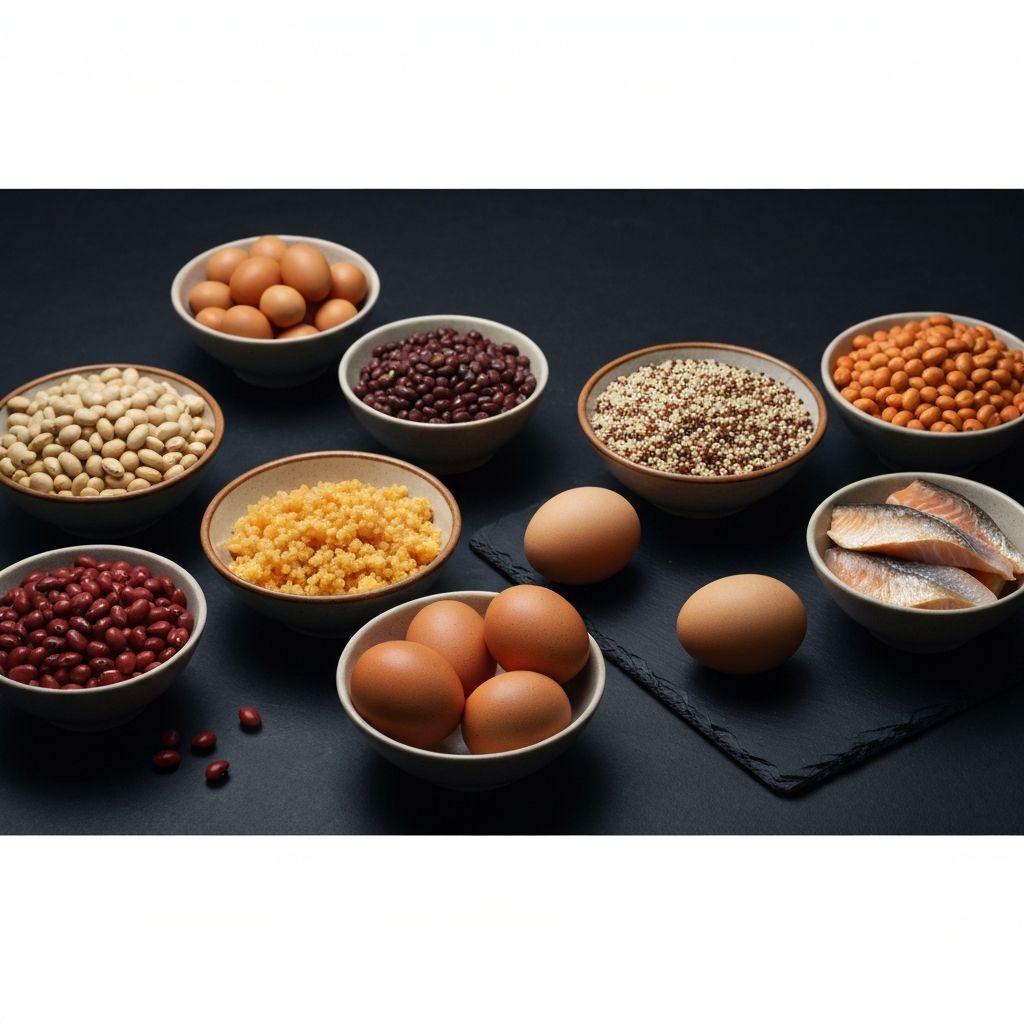
Among the three macronutrients, protein occupies a uniquely complex position in nutritional science. Unlike carbohydrates and fats — which serve primarily as energy substrates — proteins function as the structural and functional material of virtually every biological system in the body. Their roles extend across muscle physiology, enzymatic biochemistry, immune function, hormonal signalling, and cellular repair.
Despite this centrality, protein remains one of the most commercially distorted topics in popular nutrition. This article examines what nutritional science actually says about protein — its composition, physiological functions, dietary sources, and metabolic significance — independent of any product advocacy or dietary prescription.
Protein Structure: Amino Acids
Proteins are composed of amino acids — nitrogen-containing organic compounds linked by peptide bonds. Twenty standard amino acids contribute to human protein synthesis, nine of which are classified as "essential" (indispensable), meaning the body cannot synthesise them endogenously and they must be obtained through dietary intake.
The nine essential amino acids are: histidine, isoleucine, leucine, lysine, methionine, phenylalanine, threonine, tryptophan, and valine. Several others become conditionally essential during periods of illness, growth, or physiological stress, including arginine, glutamine, and tyrosine.
The concept of protein quality relates to a food's amino acid profile — whether it contains all essential amino acids in adequate proportions — as well as its digestibility. Animal-derived proteins (eggs, dairy, meat, fish) are generally considered "complete" proteins, while most plant sources require thoughtful dietary combination to achieve comparable amino acid coverage, though this is entirely achievable through varied plant-based eating.
Protein Synthesis and Muscle Physiology
Muscle protein synthesis (MPS) is the process by which the body constructs new muscle proteins from amino acid substrates. It is stimulated by both dietary protein intake — particularly leucine, which acts as a key signalling trigger via the mTOR pathway — and mechanical loading (exercise). Muscle protein breakdown (MPB) occurs continuously, and the net balance between synthesis and breakdown determines muscle mass outcomes over time.
Research in this area has refined earlier assumptions about optimal protein distribution across meals. There is evidence suggesting that protein synthesis is maximised when intake is distributed across multiple meals rather than concentrated in one or two, though the magnitude of this effect varies between individuals and research continues to evolve.
Leucine Threshold
The concept of a "leucine threshold" — a minimum dose of leucine required to maximally stimulate muscle protein synthesis — has emerged from clinical research. Studies suggest approximately 2–3 grams of leucine per meal may be required to trigger optimal MPS, an amount present in roughly 25–40 grams of most high-quality protein sources. This threshold may differ based on age, with older adults potentially requiring higher leucine doses to achieve the same anabolic response.
Protein and Satiety
Protein is consistently identified in appetite research as the most satiating macronutrient. Its influence on satiety operates through multiple mechanisms: it stimulates the release of satiety hormones including peptide YY (PYY) and glucagon-like peptide-1 (GLP-1), while suppressing ghrelin — the primary appetite-stimulating hormone. Additionally, protein's high thermic effect (20–30% of its calories are consumed in digestion) means its net energy delivery is lower than carbohydrates or fats of equivalent weight.
Enzymatic and Structural Functions
Beyond muscle physiology, proteins serve as the catalysts of virtually all biochemical reactions in the body. Enzymes — specialised proteins — facilitate metabolic pathways from glucose breakdown to DNA replication. Structural proteins including collagen (connective tissue, skin, bone matrix), keratin (hair, nails), and actin/myosin (muscle contractile fibres) provide the physical architecture of tissues.
Transport proteins carry molecules through the bloodstream — haemoglobin transports oxygen; albumin carries fatty acids and certain medications. Immune function depends heavily on immunoglobulins (antibodies), which are glycoproteins synthesised in response to antigenic exposure. Hormonal proteins including insulin, growth hormone, and glucagon regulate metabolic processes across multiple organ systems.
Dietary Sources of Protein
Protein is found across a broad spectrum of foods, both animal and plant-derived. The following categories are among the most commonly discussed in nutritional literature:
- Animal-derived proteins: Eggs, fish and seafood, poultry, red meat, dairy (milk, yoghurt, cheese) — characterised by complete amino acid profiles and high digestibility.
- Legumes: Lentils, chickpeas, black beans, kidney beans — high in protein and fibre, though typically lower in some essential amino acids relative to animal sources.
- Soya and products: Tofu, tempeh, edamame, soya milk — among the most complete plant-based protein sources, with amino acid profiles that compare favourably to many animal proteins.
- Whole grains: Quinoa, amaranth, oats — contribute meaningful protein alongside carbohydrates and fibre.
- Nuts and seeds: Hemp seeds, pumpkin seeds, almonds, peanuts — provide protein alongside healthy fats, though in lower concentrations per serving.
Protein Across the Life Span
Protein requirements are not uniform across all life stages. Current nutritional research indicates that requirements may be elevated during growth periods (infancy, childhood, adolescence), pregnancy and lactation, older adulthood (due to anabolic resistance — reduced efficiency in utilising dietary protein for MPS), and during recovery from illness or injury.
Population-level reference intakes serve as baseline estimates for healthy adults, but individual context — activity level, body composition goals, health status — introduces significant variability. This is an area where the guidance of a qualified dietitian or nutritionist is particularly relevant.
Protein Quality Assessment
Several frameworks exist for assessing protein quality. The Digestible Indispensable Amino Acid Score (DIAAS), developed by the Food and Agriculture Organisation (FAO), is considered among the most scientifically rigorous current tools. It measures the digestibility and indispensable amino acid content of a protein source relative to a reference pattern for human requirements. DIAAS has increasingly replaced the older Protein Digestibility Corrected Amino Acid Score (PDCAAS) in research contexts.
Educational Context
This article presents nutritional science concepts for informational purposes only. It does not constitute dietary advice, medical guidance, or a personal recommendation of any kind. Individual protein requirements vary considerably based on health status, age, physical activity, and other factors that cannot be addressed in a general educational article.